Why Your Personal Brand Is Now Your Most Valuable Business Asset
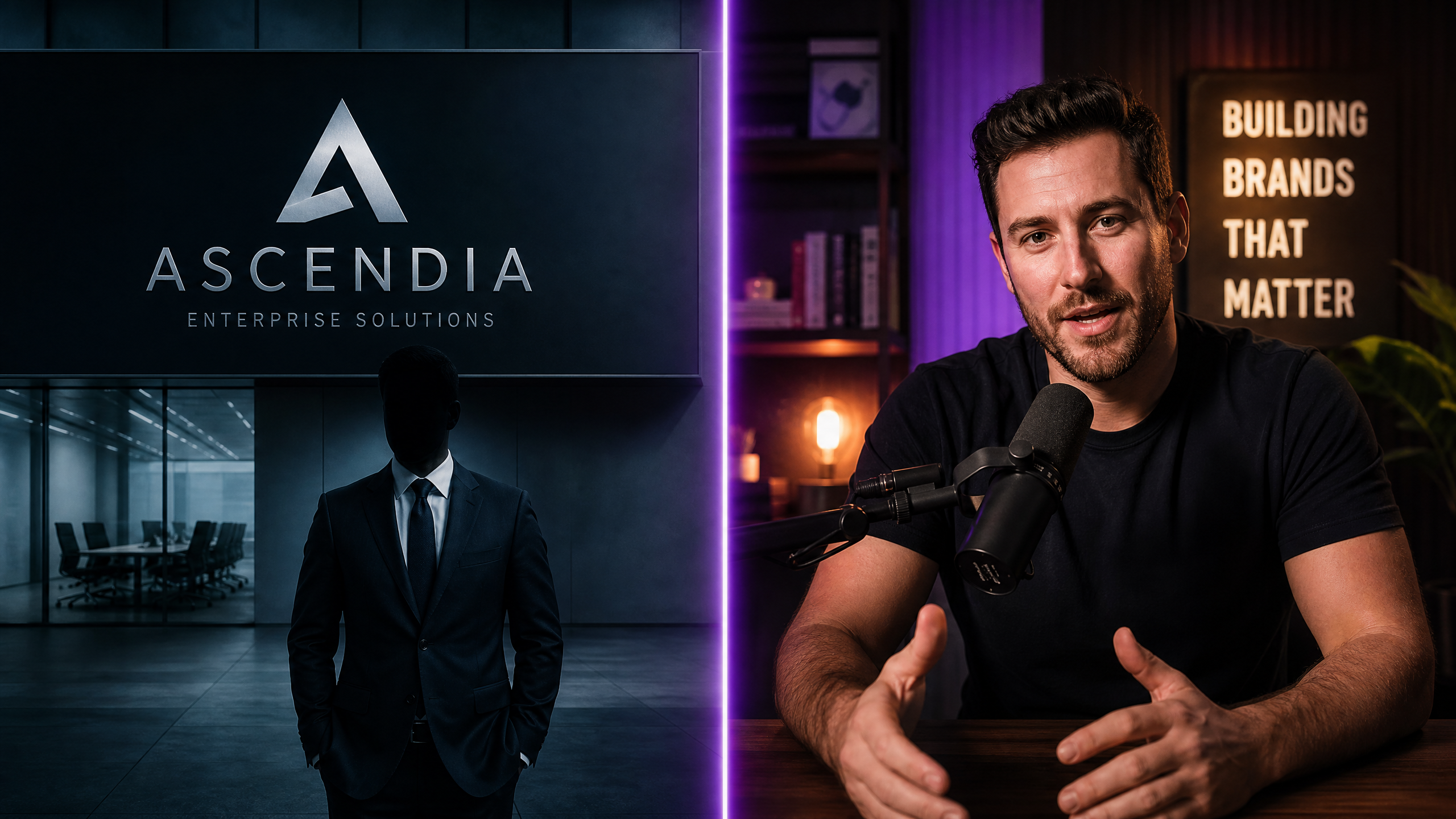
Around 2018, something shifted in the way people related to brands.
It wasn't sudden. It didn't happen on a single day. But if you were paying attention, you could feel it — a growing impatience with the polished, the corporate, the carefully managed. Consumers had spent years being marketed to by faceless logos and stock photography, and they were done with it.
What they wanted instead was people. Real people. With opinions. With stories. With failures they weren't afraid to talk about. The brands that understood this early — Gary Vaynerchuk, Brené Brown, Simon Sinek, and a generation of founders who built their businesses in public — didn't just grow their audiences. They built movements. They became the obvious choice in their categories not because they had the biggest advertising budget, but because people felt like they knew them.
This was the beginning of what we now call personal branding. And it changed everything about how businesses grow.
Around 2018, consumers stopped following logos. They started following people. The brands that understood this early didn't just grow — they became movements.
What Personal Branding Actually Means
Personal branding gets misunderstood constantly. People hear the phrase and think it means having a professional headshot, a consistent Instagram grid, and a LinkedIn bio that describes you as a "passionate thought leader and change-maker."
That's not personal branding. That's personal marketing — and it's usually the kind that nobody pays attention to.
Real personal branding is something more uncomfortable and more powerful. It's the deliberate decision to show up as yourself — your actual self, with your actual opinions, your actual story, and yes, your actual failures — consistently enough that people start to associate who you are with what you do.
It means being willing to say things that not everyone will agree with. It means sharing the version of your business journey that includes the wrong turns, not just the highlights reel. It means having a point of view on your industry that's specific enough to attract some people and repel others — because the alternative, trying to appeal to everyone, is the fastest way to be remembered by no one.
The counterintuitive truth about personal branding is that the more specific and authentic you are, the faster you find your crowd. The people who resonate with your story, your values, and your perspective become far more loyal customers than anyone you could have reached with a generic ad campaign.
Why Authenticity Became a Competitive Advantage
The shift toward personal branding wasn't just a cultural preference. It was a response to something specific: the collapse of trust in institutions and advertising.
By the late 2010s, ad blockers were mainstream. Organic social media reach had collapsed. Consumers had become sophisticated enough to recognise — and dismiss — content that was clearly designed to sell them something. The traditional playbook of polished brand photography, carefully worded press releases, and one-way broadcast advertising was producing diminishing returns.
What cut through the noise was authenticity. Not performed authenticity — the kind where a brand posts a "behind the scenes" photo that's been lit and styled to within an inch of its life — but genuine, unfiltered human presence. The founder who talked openly about the year their business almost failed. The CEO who shared their actual opinion on an industry controversy. The business owner who showed up on camera looking like a real person rather than a stock photo.
This kind of content performed because it was different. It was trustworthy. And it created something that no amount of advertising spend can manufacture: familiarity.
The people who resonate with your story become far more loyal customers than anyone you could have reached with a generic ad campaign.
The Psychology of Familiarity and Trust
There's a well-documented psychological phenomenon called the mere exposure effect: the more we're exposed to something, the more we tend to like it. Applied to personal branding, this means that the business owner who shows up consistently — on YouTube, on LinkedIn, on a podcast, in search results — builds a relationship with their audience before any sales conversation ever happens.
This is why repetition in branding is not annoyance. It's strategy.
When a potential customer has watched three of your videos, read two of your articles, and listened to an episode of your podcast, they arrive at a sales conversation already trusting you. They already know how you think. They already know your values. They've already decided, on some level, that you're the kind of person they want to work with.
The businesses that understand this don't think about content as a way to sell. They think about it as a way to build relationships at scale — to have the kind of conversations that would normally happen one-on-one, but with hundreds or thousands of people simultaneously.
Why Passion and Failure Build More Authority Than Credentials
One of the most counterintuitive lessons in personal branding is that your failures are often more valuable than your credentials.
Credentials tell people what you've achieved. Failures tell people who you are.
When a business owner talks openly about the client they lost, the product launch that didn't work, the year the numbers looked terrible — they're demonstrating something that no qualification can: that they've been tested, and they kept going. That's what passion looks like from the outside. Not relentless positivity, but resilience. Not a perfect track record, but a genuine commitment to the work.
This kind of content builds authority precisely because it's rare. Most businesses are still presenting the polished version of themselves — the awards, the testimonials, the case studies. The business owner who's willing to be honest about the hard parts stands out immediately, because they're saying something true in a world full of marketing.
And when people see that you're willing to be honest about the hard parts, they trust that you're being honest about everything else too.
Your failures are often more valuable than your credentials. Credentials tell people what you've achieved. Failures tell people who you are.
Personal Branding in 2025: The Search Dimension
Personal branding has always been about visibility and trust. But in 2025, it has a new dimension that most business owners haven't fully reckoned with yet: search.
Google's algorithm has evolved significantly over the past few years. The concept of E-E-A-T — Experience, Expertise, Authoritativeness, Trustworthiness — now sits at the heart of how Google evaluates content. And what Google is looking for, essentially, is evidence that a real person with genuine expertise is behind the content they're ranking.
This means that a business owner who publishes consistently — who shares their thinking, their experience, and their perspective on their industry — is building SEO value with every piece of content they create. Not because they're stuffing keywords into blog posts, but because they're demonstrating the kind of demonstrated expertise that Google rewards.
AI search engines like ChatGPT, Gemini, and Perplexity take this even further. These platforms don't just rank pages — they synthesise answers from the sources they consider most authoritative. The business owners who show up in AI-generated answers are the ones who have published enough substantive, specific content that AI systems recognise them as credible sources on their topics.
In other words, personal branding is now an SEO strategy. And the businesses that understand this early will have a significant advantage over those that don't.
Why Podcasting Is the Most Powerful Format for Personal Branding
If personal branding is about showing up as yourself — with your opinions, your stories, and your genuine perspective — then the question becomes: what's the most efficient format for doing that at scale?
The answer, for most business owners, is a podcast.
Not because podcasting is trendy. Not because everyone else is doing it. But because conversation is the most natural format for authentic human expression. When you're sitting across from someone having a real conversation, you're not performing. You're not reading from a script. You're thinking out loud, sharing your perspective, and being genuinely yourself — which is exactly what personal branding requires.
A video podcast does something that no other format can match: it lets your audience see your face, hear your voice, and watch you think in real time. They see how you respond when you're challenged. They hear the passion in your voice when you talk about something you care about. They notice when you're being honest about something difficult. All of this builds the kind of trust and familiarity that converts strangers into customers.
And for local businesses — businesses that want to show they're part of a community, that they're run by real people who are invested in their city — being on camera in a real studio in Melbourne is a powerful signal. It says: we're here, we're real, and we're not going anywhere.
Conversation is the most natural format for authentic human expression. When you're having a real conversation, you're not performing — you're being yourself. Which is exactly what personal branding requires.
From One Conversation to Months of Content
The practical objection most business owners have to personal branding is time. They understand the value. They agree with the principle. But they look at their calendar and can't see where the content creation fits.
This is where the modern approach to personal branding is fundamentally different from what most people imagine.
You don't need to post every day. You don't need to be a content creator. You need to have one good conversation per month — and let a production team turn that conversation into everything else.
That's a month of consistent, authentic content from a single session. You show up, you have a conversation, and the content works for you around the clock — building your personal brand, improving your SEO, and keeping you visible to the people who are looking for exactly what you do.
The Businesses That Win Are the Ones That Show Up
The businesses that will dominate their categories over the next five years are not necessarily the ones with the biggest budgets or the most sophisticated marketing strategies. They're the ones that show up consistently — that are visible, that are trustworthy, and that have built a body of work that speaks for them before any sales conversation begins.
Personal branding is not a vanity project. It's a business strategy. And in a world where consumers can research any business in seconds, where AI search engines are synthesising answers from the most authoritative sources available, and where trust is the scarcest commodity in any market — the business owners who have invested in showing up as themselves will have an advantage that no advertising budget can replicate.
The question isn't whether personal branding matters for your business. It does. The question is whether you're going to start building yours now, or wait until your competitors already have a two-year head start.
Start With a Conversation
If you're a business owner in Melbourne who wants to build your personal brand, improve your SEO, and create content that keeps working long after the recording session is over — the most efficient place to start is a single conversation.
At Creative Creatures, we've built a video podcast studio specifically for business owners who understand the value of showing up consistently but don't have the time or the team to manage a full content operation. One session. One conversation. Months of content.
We don't make podcasts. We build authority.
Written by
Keir Telfer-Williams